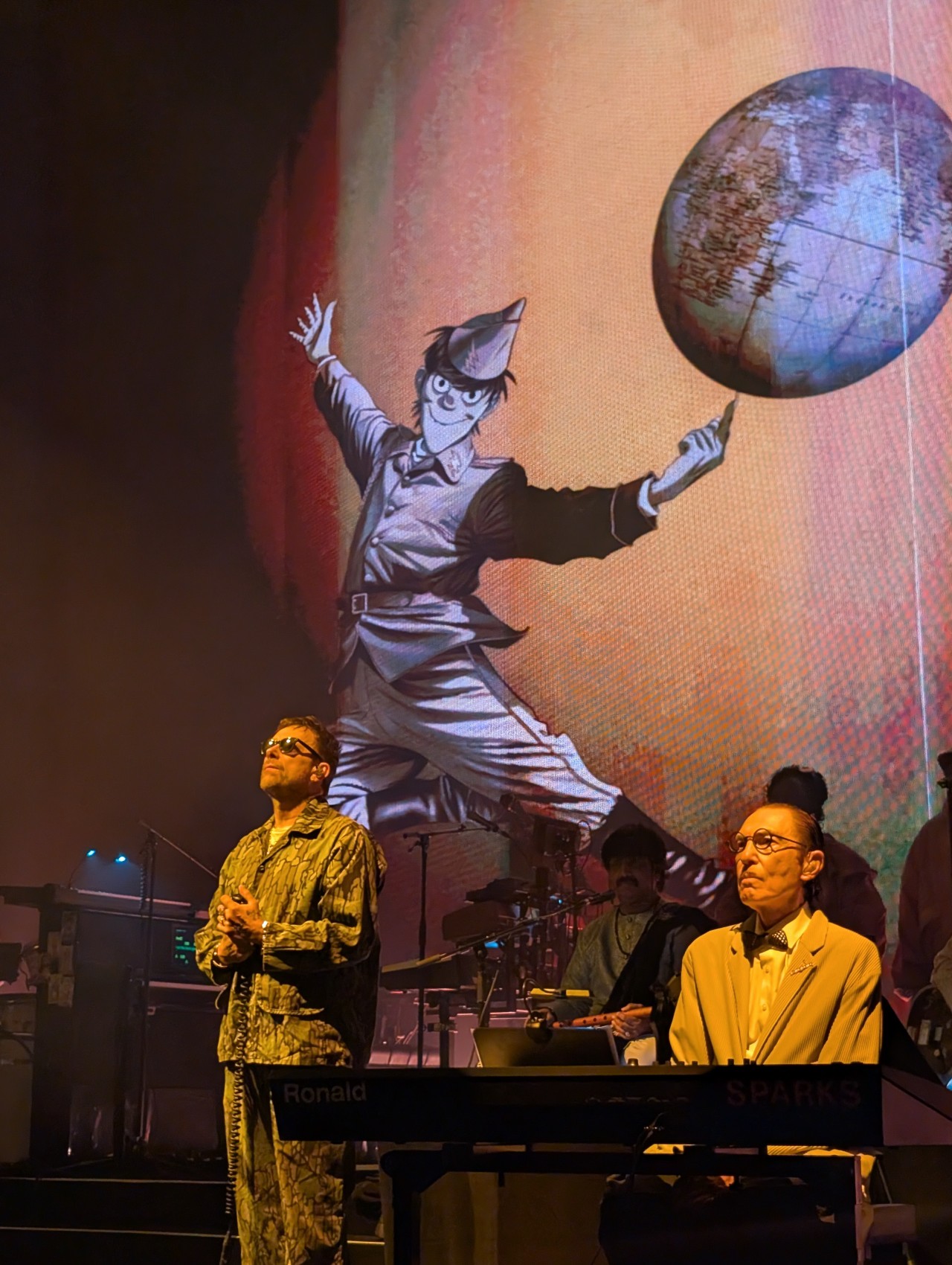
Gorillaz perform with collaborator Sparks - Hollywood Palladium Feb 23, 2026
In the early 2000s, Gorillaz was one of the strangest things in music: a band that didn’t exist. The members were animated characters — 2D, Murdoc, Noodle, Russel — complete with fictional biographies, interviews, and entire online lives. And yet the project felt unmistakably real. Two decades later, the internet is full of synthetic creators: AI influencers, algorithmic musicians, entire personalities generated for engagement. What Gorillaz revealed early is something we’re only now grappling with at scale. Artificial doesn’t automatically mean inauthentic. But authorship still matters.
I saw Gorillaz perform their ninth studio album, The Mountain, live in LA last month, and I haven’t been able to stop thinking about it. I’ve been following this band for twenty years, so more than half my life. In that span, I’ve watched the internet and social media reshape culture, and now AI is doing it again. Gorillaz always seemed to arrive slightly ahead of the curve. Watching them now, I’m not sure that’s a coincidence.
Before anyone was taking about the “metaverse,” Gorillaz had already built one. The band pioneered what we’d now call transmedia storytelling: animated characters giving interviews as though they were real people, MTV segments building out their lore, elaborate Flash websites seeding fictional biographies between album cycles, and AR experiences years before the technology was mainstream. They projected animated versions of themselves alongside Madonna at the Grammys in 2006 — a stunt that felt genuinely impossible at the time and now reads as a proof of concept for everything that followed. They made technology feel like part of the art, not a gimmick layered on top of it, and they did it in service of a story, not a brand.
Which is why I found myself returning to a recent quote from co-creator Jamie Hewlett, when asked whether he’d use AI in his work:
“Well for me, personally, I wouldn’t use it. But at the same time, AI, if you’re using it in the art world, is a tool. Just like when Photoshop arrived on the scene. It’s what you’re doing with it that matters.”
It’s a measured, pragmatic take — exactly what you’d expect from someone who spent his career using technology to create the illusion of life. But his creative partner, Damon Albarn, sees it differently:
“Music and art should not be easy. Once it becomes easy it’s meaningless… It’s a weird intuition that the listener has, that picks up on the journey that the artist has been through to make that particular thing. You can’t replace it.”
Albarn’s instinct isn’t just romantic nostalgia. It maps onto something people feel before they can explain it. Studies show that when audiences learn a brand has used generative AI to create content, their perception of authenticity measurably drops — even when they can’t distinguish the output from something human-made1. The effort behind the thing, the invisible struggle, seems to communicate itself somehow. Or at least, the knowledge that it’s absent does.
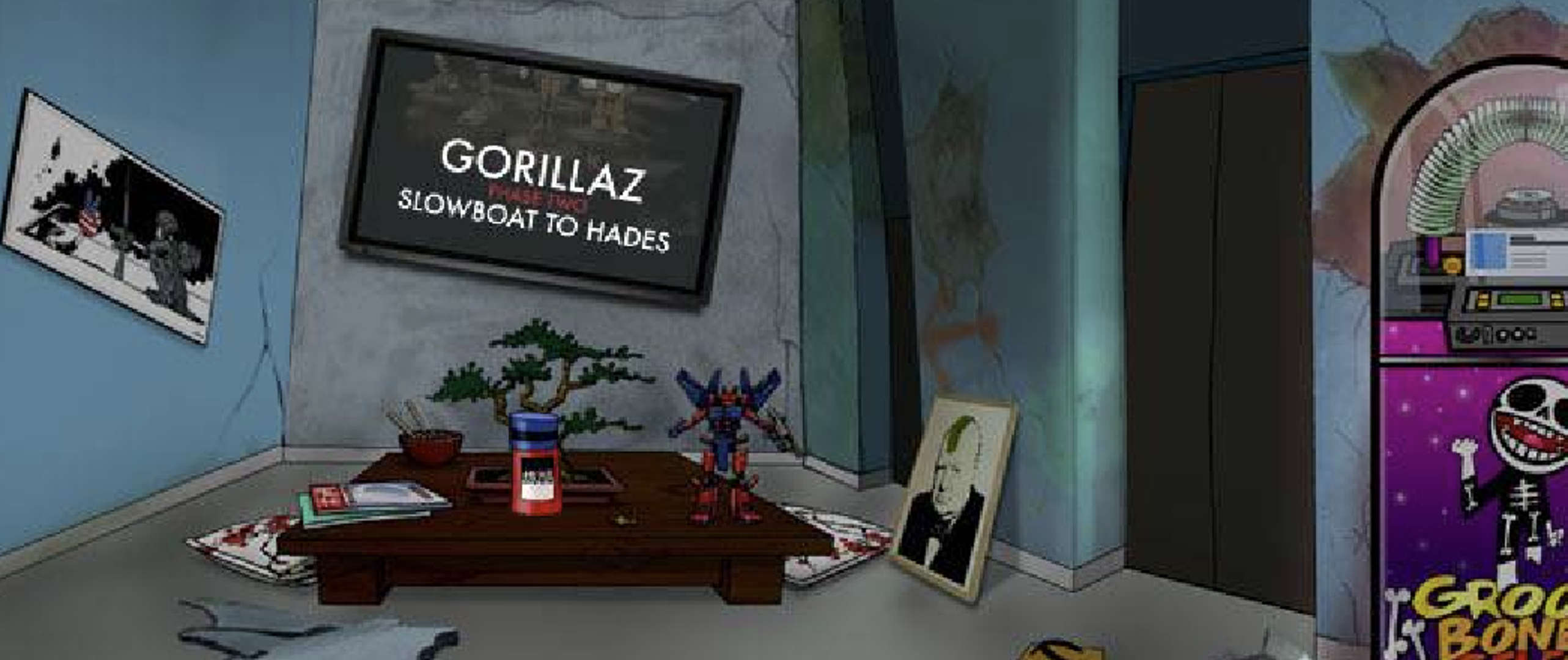
Kong Studios is a gamified fan experience where you can explore the rooms and spaces of 2D, Murdoc, Noodle and Russel
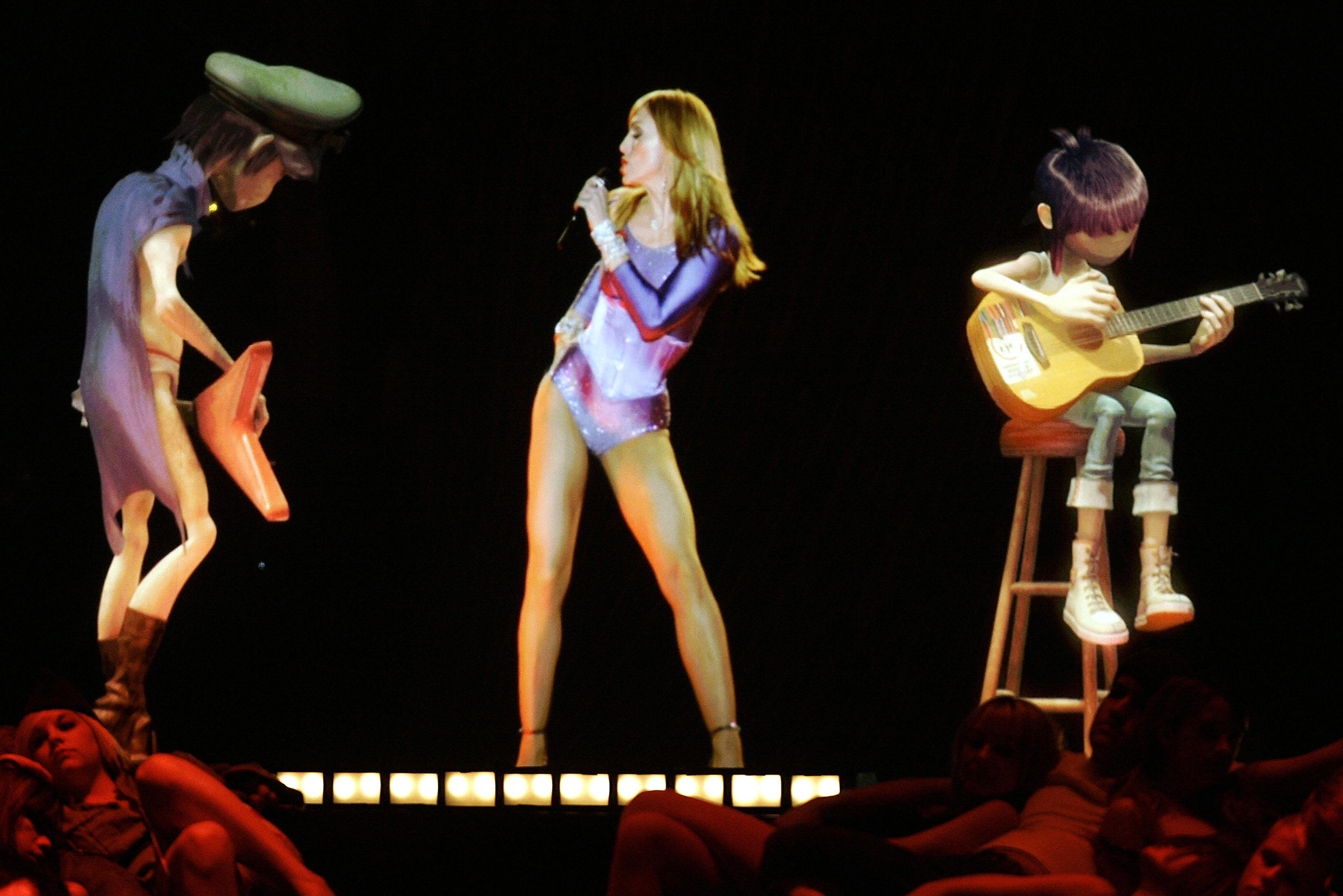
Gorillaz performing Feel Good Inc. alongside Madonna at the 2006 Grammys
In 2016, an Instagram account appeared called @lilmiquela. She was 19, Brazilian-American, living in LA, posting selfies and sharing her taste in music and fashion. She had freckles. She had opinions. She had 500,000 followers before anyone publicly confirmed she wasn’t real.
Miquela Sousa is a CGI character created by a Los Angeles startup called Brud. She has since amassed millions of followers, released original music, fronted campaigns for Prada and Calvin Klein, and spoken out on Black Lives Matter and LGBTQ+ rights. By every metric of the influencer economy, she is a success. She is also, in a very literal sense, a product — designed, iterated, and optimized by a team of engineers and marketers with venture capital behind them.
If you squint, she looks like what Gorillaz gestured toward: a fictional persona with a rich inner life, engaging audiences across media, blurring the line between real and constructed. She is, in a sense, the fully realized technological version of the idea. Gorillaz proved the concept — that people could emotionally invest in something they knew wasn’t real — and Silicon Valley took notes.
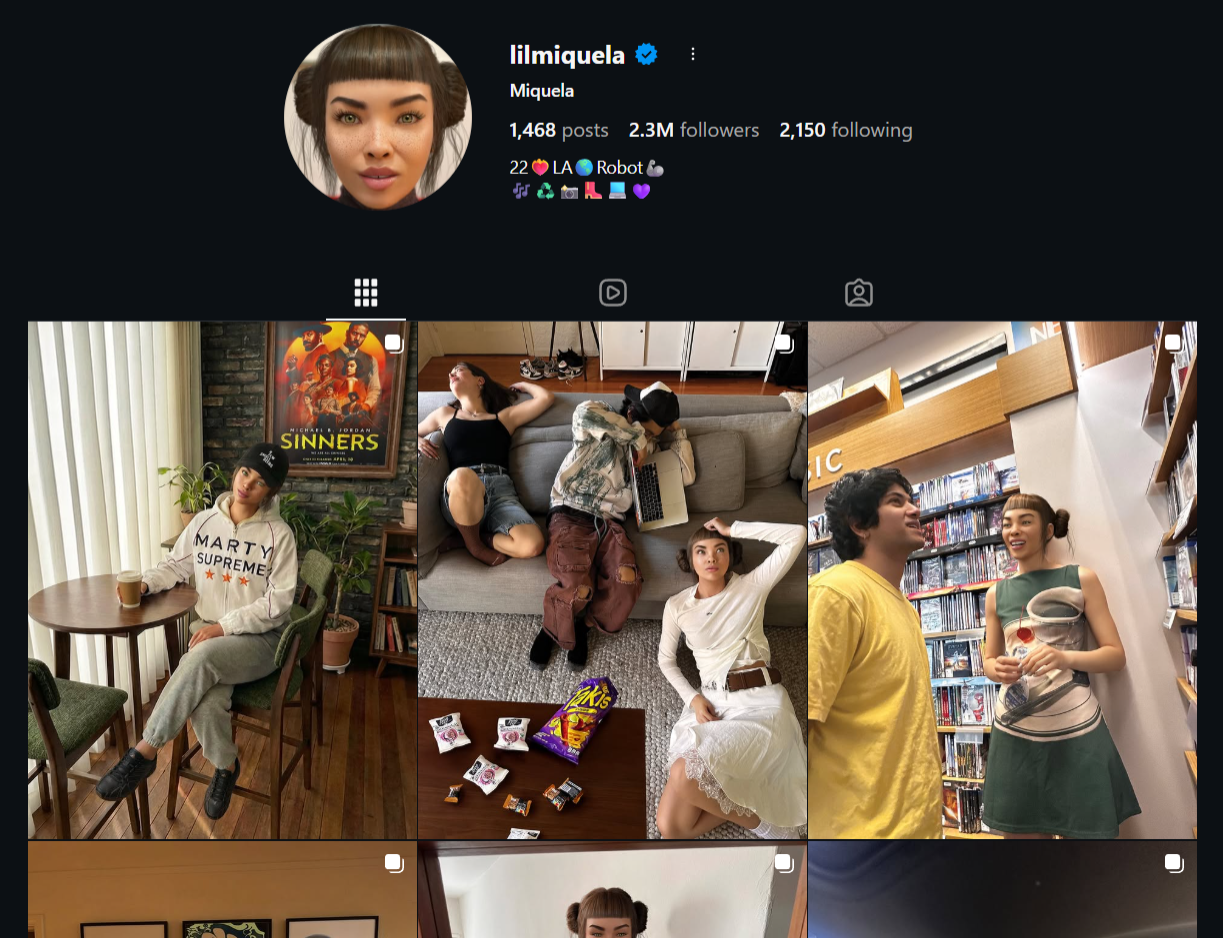
AI Influencer @lilmiquela’s Instagram account
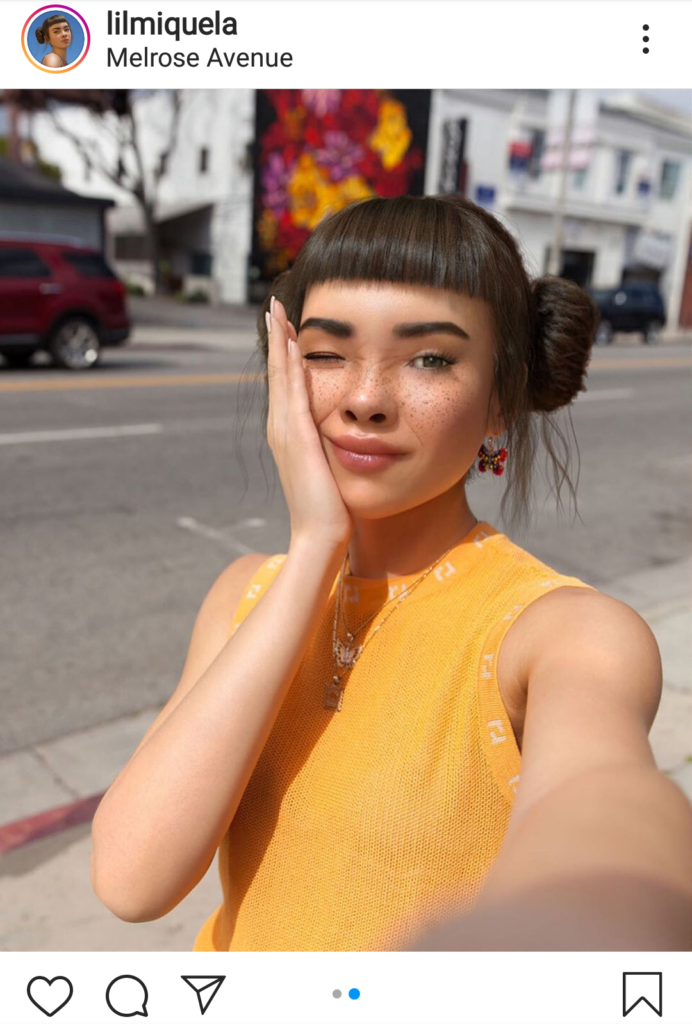
But something is missing. Gorillaz were always transparently a vehicle for something: Albarn’s anxieties about celebrity, Hewlett’s visual imagination, their shared skepticism of the music industry they were simultaneously part of. The cartoon faces were a mask, but there was always a face behind the mask. With Miquela, you keep pulling back layers expecting to find the same thing — and instead you find the business model.
This isn’t a novel observation; that something can look like art without being art. But Miquela makes it unusually legible, because the template she’s working from is so visible. We know what a fictional persona with genuine creative vision behind it feels like. Gorillaz spent over two decades showing us. So when we encounter one without it, the absence has a shape.
Albarn’s quote has stayed with me because it proposes something almost unfalsifiable; that listeners have a sixth sense for labor, for struggle, for the behind-the-scenes cost of making something. It’s a romantic idea. It’s also, I think, basically correct.
Not in a pretentious way. In a practical one. When you spend years with a piece of music — and I mean really live with it, return to it across different versions of yourself — what you’re partly responding to is the evidence of choices. The moment where the production gets weird and you can tell someone made a decision that scared them. The lyric that’s too specific to be calculated. The thing that couldn’t have been generated because it required someone to have been somewhere, felt something, and not looked away.
Think about what made Bowie’s Berlin trilogy — Low, “Heroes”, Lodger — so enduring. Those albums were strange and fractured partly because Bowie arrived at them through failure and excess and genuine crisis. The paranoia in the music wasn’t performed; it was metabolized. You can’t separate the work from the journey that produced it, and neither, it turns out, can the listener.
This is what AI-generated content, at its current state, almost universally lacks. Not skill — the technical outputs are increasingly impressive. Not even aesthetic coherence. What it lacks is the evidence of someone having something at stake. You can feel the optimization. The content arrives having already decided what it wants you to feel, pre-smoothed of anything that might alienate or challenge or sit uncomfortably. It’s the texture of things made by something that has never been confused, or afraid, or wrong about itself.
Lil Miquela is an early and obvious example. But the same logic applies to AI music flooding streaming platforms, algorithmically generated articles, synthetic social media personalities built to capture niche demographics. The technology keeps improving, but the emptiness doesn’t go away — it just gets harder to name.
Gorillaz passed the Albarn test because there were two people behind them who had genuinely been somewhere. The band was stranger and more difficult and more specific than any optimization process would have allowed. That strangeness was the signal. It still is.
I want to be careful not to make this into a simple story, because Hewlett won’t let me.
His Photoshop analogy is worth sitting with. When digital image editing arrived, the same anxieties surfaced — that it would cheapen photography, that it would make skill irrelevant, that the invisible labor of the darkroom would be replaced by shortcuts. And in some hands, it did exactly that. In others, it became the medium for genuinely extraordinary work. The tool didn’t determine the outcome. The person holding it did.
Hewlett has spent his entire career doing things with technology that nobody had done before. He’s not a purist. He’s someone who understands that the history of art is largely the history of artists absorbing new tools and finding ways to make them say something true. To dismiss that would be to misread his own biography.
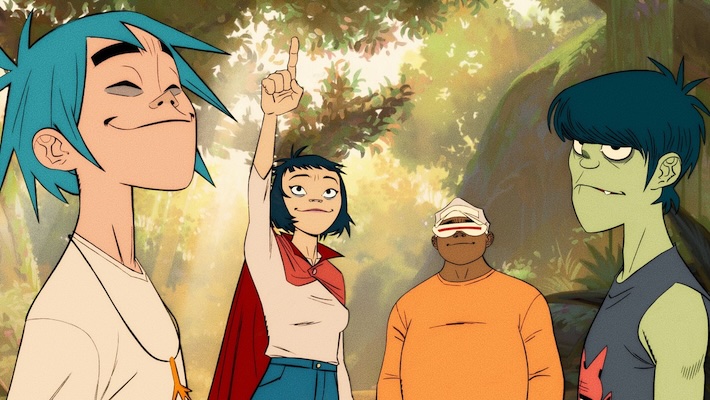
Gorillaz’ hand-animated music video for The Mountain, The Moon Cave And The Sad God was the creators’ conscious statement against using AI
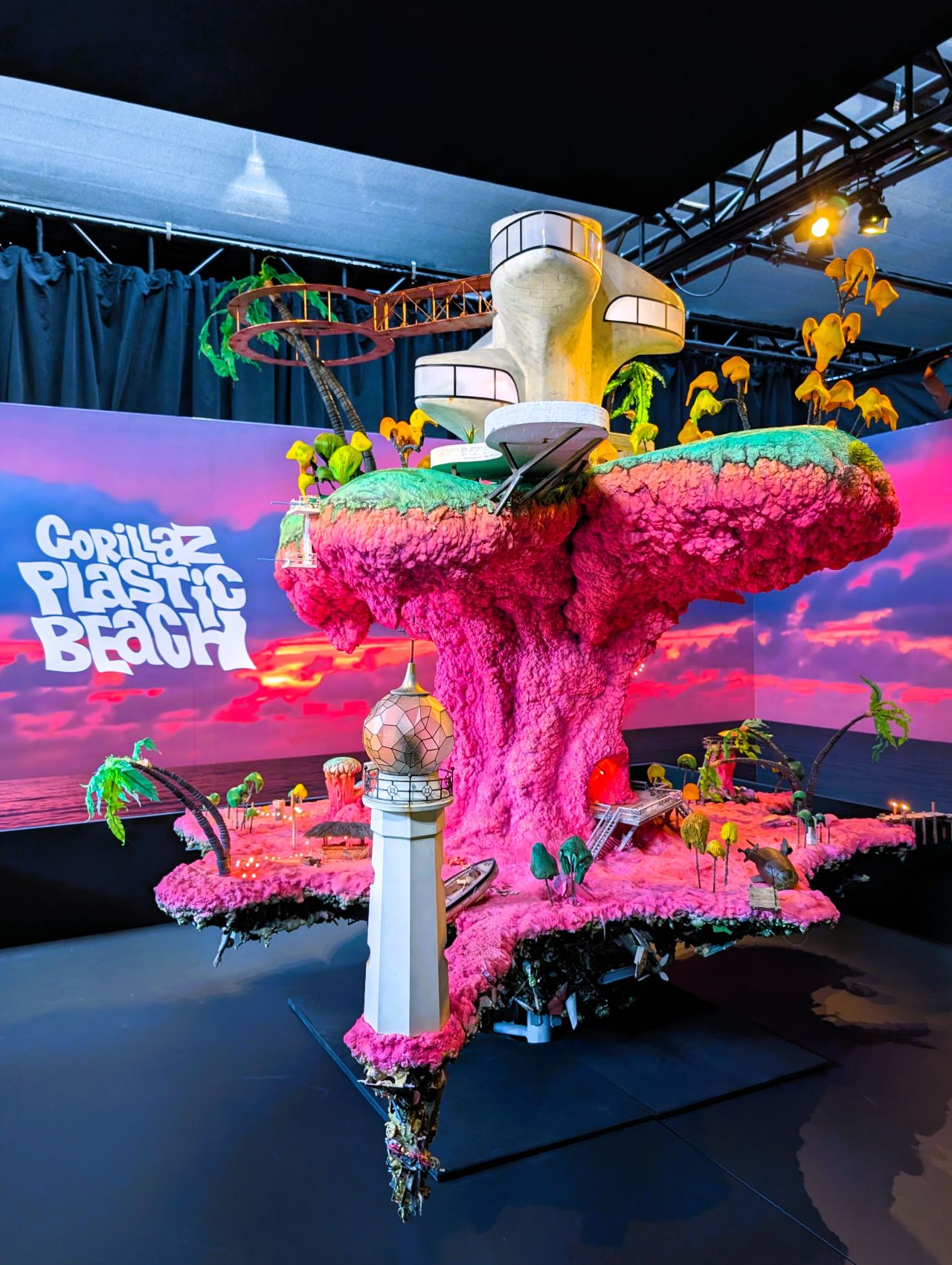
Hewlett’s model of Plastic Beach on display at House of Kong exhibit in LA
So the honest version of this argument isn’t that AI is inherently corrupting. It’s that most of what’s being made with it right now is being made by people who have nothing to say and are using it to say nothing faster. That’s a problem of intent, not technology. Lil Miquela isn’t hollow because she’s CGI. She’s hollow because the people who made her were building an asset, not expressing something.
Which means, uncomfortably, that the door is still open. Someone could theoretically use generative AI the way Gorillaz used animation — as a vehicle, a distance mechanism, a way of getting at something true by indirect means. Maybe someone already has and I haven’t encountered it yet. The technology isn’t the poison. The absence of anyone trying to say something is.
The question is just whether the economics of the attention economy make that kind of use essentially impossible at scale. Gorillaz could be strange and difficult because Albarn and Hewlett were willing to be. Most AI content pipelines are optimized specifically to sand that strangeness away. The tool is neutral. The industry built around it is not.
I’ve been thinking about why seeing Gorillaz live this time hit me the way it did, compared to when I first saw them play Plastic Beach at Coachella sixteen years ago. There’s something disorienting about watching animated characters perform — the band is on stage, real musicians, but the faces projected above them are fictional, have always been fictional, will outlast everyone in that room. 2D doesn’t age. Murdoc doesn’t have bad nights. Meanwhile, Albarn and I are both older, with more gray hair and worse knees. The cartoon is immune to time in a way the humans behind it and I aren’t.
And yet the whole thing is suffused with humanity. You can feel Albarn’s voice carrying decades of wear. You can feel the crowd’s relationship with songs that were there for them during specific periods of their lives. The artificiality doesn’t diminish that — it somehow concentrates it. The distance between the cartoon and the human is where the feeling lives.
That’s what I keep coming back to when I think about where AI is taking us. The problem was never the artificiality. Gorillaz settled that question before most of us were paying attention. Fictional personas can carry real emotion. Constructed identities can tell the truth. The mask is not the lie.
The lie is when there’s nothing behind the mask. When the distance isn’t in service of honesty but instead of it. When the technology exists not to help someone say something they couldn’t say otherwise, but to simulate the act of saying something without the inconvenience of having anything to say.
…The honest version of this argument isn’t that AI is inherently corrupting. It’s that most of what’s being made with it right now is being made by people who have nothing to say and are using it to say nothing faster. That’s a problem of intent, not technology. Lil Miquela isn’t hollow because she’s CGI. She’s hollow because the people who made her were building an asset, not expressing something.
Lil Miquela is not the future of AI creativity. She’s a warning about one version of it — the version that perfects the form while abandoning the function. The version that learns exactly what authentic expression looks like and reproduces it endlessly, without ever having been anywhere or felt anything or had anything at stake.
Gorillaz were strange and difficult and specific because two people with genuine vision refused to let them be otherwise. That refusal — against the pressures of the industry, against the easier path, against the smoothing force of optimization — is what made them matter. It’s what made them last.
The question AI puts to every creative field right now is not whether machines can make things that look like art. They clearly can. The question is whether we still value the evidence of a human being having gone somewhere to make it. Whether we can still feel the difference. Whether we care.
I think we do. I think the Gorillaz crowd in LA, twenty-seven years on, singing along to songs made by people they’ve never met through characters that don’t exist, is evidence of that. People will always find their way to the real thing. The trick is making sure there’s still someone making it.